Florida Native Plant Database

Know Your Natives

Detailed profiles for Florida's most valuable native plants β€” care requirements, wildlife benefits, regional suitability, and everything you need to grow them with confidence.

Florida Native Plant Profiles

Every plant here is native to Florida β€” meaning it evolved here, supports local wildlife, and is adapted to Florida's climate and soils. Start with a few of these and you'll have a landscape that practically takes care of itself.

20 Plants Profiled
Firebush (Hamelia patens) covered in tubular orange-red flowers with hummingbird Central & South FL Shrub

Hamelia patens Β· Rubiaceae

Firebush

One of the most wildlife-productive shrubs in Florida. Tubular orange-red blooms from spring through frost draw hummingbirds, sulphur butterflies, and bumblebees continuously. Fast-growing and drought tolerant once established β€” a cornerstone native for any sunny yard.

β˜€οΈ
Light
Full Sun – Part Shade
πŸ’§
Water
Low (once established)
πŸ“
Size
6–10 ft tall & wide
🌑️
Cold
Root hardy to 20Β°F
Butterfly Host Hummingbirds Bees Birds (berries)
Coontie (Zamia integrifolia) β€” Florida's native cycad with arching dark green fronds All Florida Groundcover

Zamia integrifolia Β· Zamiaceae

Coontie

Florida's only native cycad and one of its toughest plants. Thrives in deep shade or full sun, handles drought, salt spray, and nutrient-poor soils. The sole host plant for the endangered Atala butterfly. Architectural, low-maintenance, and profoundly ecological.

🌀️
Light
Full Sun to Deep Shade
πŸ’§
Water
Very Low (drought tough)
πŸ“
Size
2–3 ft tall, spreading
🌑️
Cold
Hardy to 15Β°F
Atala Butterfly Host Birds (seeds)
American Beautyberry (Callicarpa americana) with vivid magenta-purple berry clusters All Florida Shrub

Callicarpa americana Β· Lamiaceae

American Beautyberry

No native shrub commands more attention in the fall landscape. Clusters of jewel-bright magenta-purple berries line every branch, feeding 40+ bird species. Ideal at the woodland edge or in part shade. Cut to the ground in late winter and it bounces back with vigor.

🌀️
Light
Part Shade – Full Sun
πŸ’§
Water
Low–Moderate
πŸ“
Size
4–8 ft tall & wide
🌑️
Cold
Hardy throughout FL
40+ Bird Species Deer Browse
Field of golden-yellow Tickseed Coreopsis β€” Florida's state wildflower North & Central FL Wildflower

Coreopsis leavenworthii Β· Asteraceae

Tickseed Coreopsis

Florida's official state wildflower paints roadsides and meadows gold from spring through summer. This cheerful annual self-seeds readily, creating sweeping drifts that cost almost nothing to maintain after the first planting. Beloved by native bees and small pollinators.

β˜€οΈ
Light
Full Sun
πŸ’§
Water
Low (wet & dry tolerant)
πŸ“
Size
1–2 ft tall, spreading
🌑️
Cold
Self-seeding annual
Native Bees Small Pollinators Finches (seeds)
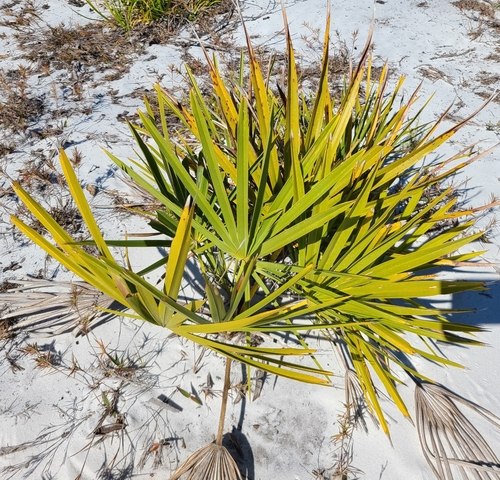
Saw Palmetto (Serenoa repens) thicket with fan-shaped silver-green fronds All Florida Shrub / Palm Wikimedia Commons

Serenoa repens Β· Arecaceae

Saw Palmetto

The backbone of Florida's flatwoods and scrub ecosystems. Saw palmetto's fruit feeds black bears, white-tailed deer, wild turkey, and over 100 bird species. Drought-tough, fire-adapted, and essentially maintenance-free once established. A keystone species in the truest sense.

β˜€οΈ
Light
Full Sun – Part Shade
πŸ’§
Water
Very Low
πŸ“
Size
3–7 ft tall, wide clumps
🌑️
Cold
Hardy throughout FL
Bear, Deer, Turkey 100+ Bird Species Cover & Nesting
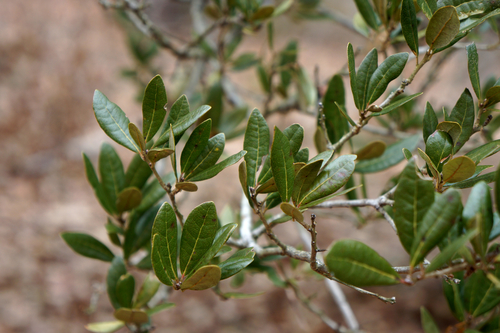
Live Oak (Quercus virginiana) with sweeping canopy covered in Spanish moss All Florida Tree Wikimedia Commons

Quercus virginiana Β· Fagaceae

Live Oak

The most iconic tree in the Florida landscape β€” and one of the most ecologically important in North America. A single live oak supports hundreds of caterpillar species, which in turn support the nesting birds that depend on them. Long-lived, sweeping, and irreplaceable.

β˜€οΈ
Light
Full Sun
πŸ’§
Water
Low (drought tolerant)
πŸ“
Size
40–80 ft tall, wide canopy
🌑️
Cold
Hardy throughout FL
500+ Caterpillar Species Acorns for Birds & Mammals Cavity Nesters
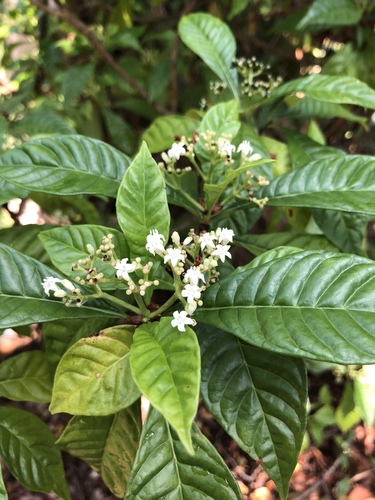
Wild Coffee (Psychotria nervosa) with glossy dark green leaves and clusters of red berries Central & South FL Shrub Wikimedia Commons

Psychotria nervosa Β· Rubiaceae

Wild Coffee

A beautiful, shade-tolerant understory shrub with glossy leaves and clusters of red berries that ripen in fall. Host plant for the Ruddy Daggerwing butterfly. Thrives under the canopy of live oaks and pines where many plants struggle. Reliable and underused.

πŸŒ‘
Light
Shade – Part Shade
πŸ’§
Water
Low–Moderate
πŸ“
Size
4–8 ft tall
🌑️
Cold
Best Central–South FL
Ruddy Daggerwing Host Birds (berries)
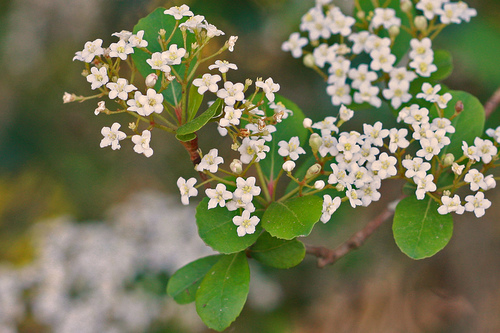
Walter's Viburnum (Viburnum obovatum) in full spring bloom with white flower clusters North & Central FL Shrub Wikimedia Commons

Viburnum obovatum Β· Adoxaceae

Walter's Viburnum

A workhorse native shrub that earns its place with clouds of white spring flowers, small dark berries that birds love, and reliable semi-evergreen foliage. Works beautifully as a hedge or foundation shrub and handles a wide range of conditions. Highly underutilized.

🌀️
Light
Full Sun – Part Shade
πŸ’§
Water
Low–Moderate
πŸ“
Size
6–15 ft (prune to shape)
🌑️
Cold
Hardy throughout FL
Birds (berries) Spring Pollinators
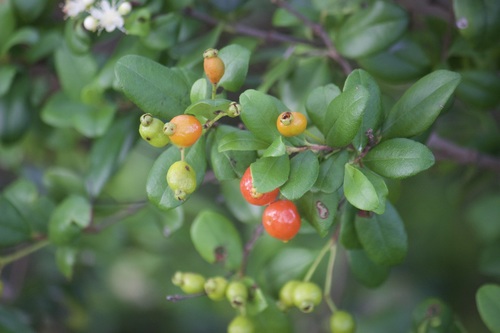
Simpson's Stopper (Myrcianthes fragrans) with white fluffy flowers and orange-red berries Central & South FL Shrub / Small Tree Wikimedia Commons

Myrcianthes fragrans Β· Myrtaceae

Simpson's Stopper

A refined, versatile native with fragrant white flowers, attractive cinnamon-colored bark, and orange-red berries that birds flock to. Can be trained as a small tree, hedge, or large shrub. Excellent for coastal landscapes β€” handles salt and drought with ease.

β˜€οΈ
Light
Full Sun – Part Shade
πŸ’§
Water
Low
πŸ“
Size
10–20 ft (trainable)
🌑️
Cold
Best Central–South FL
Birds (berries) Butterflies & Bees
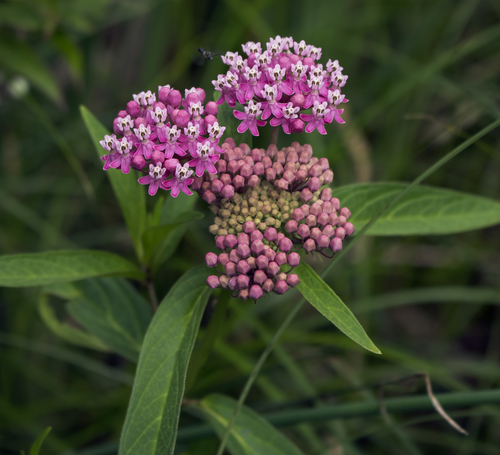
Swamp Milkweed (Asclepias incarnata) with clusters of pink flowers and monarch butterfly North & Central FL Wildflower Wikimedia Commons

Asclepias incarnata Β· Apocynaceae

Swamp Milkweed

The native milkweed that belongs in wet Florida gardens β€” and one of the best monarch butterfly host plants in the state. Unlike tropical milkweed (non-native), swamp milkweed follows a natural dormancy cycle that doesn't confuse migrating monarchs. Pink flower clusters are beautiful and bee-loved.

β˜€οΈ
Light
Full Sun
πŸ’§
Water
Moderate–Wet
πŸ“
Size
3–5 ft tall
🌑️
Cold
North & Central FL
Monarch Host Plant Bees & Wasps Hummingbirds
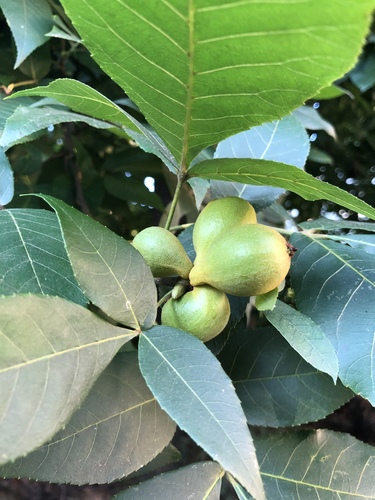
Pignut Hickory (Carya glabra) with distinctive ridged bark and compound leaves North & Central FL Tree Wikimedia Commons

Carya glabra Β· Juglandaceae

Pignut Hickory

A stately native tree that supports an extraordinary web of wildlife. The nuts feed squirrels, wild turkey, wood ducks, and black bears. Supports nearly 200 caterpillar species. Deep-rooted and long-lived, pignut hickory earns its space in any yard large enough to accommodate it.

β˜€οΈ
Light
Full Sun – Part Shade
πŸ’§
Water
Low (once established)
πŸ“
Size
50–80 ft tall
🌑️
Cold
North & Central FL
200 Caterpillar Species Squirrels, Turkey, Duck Cavity Nesting
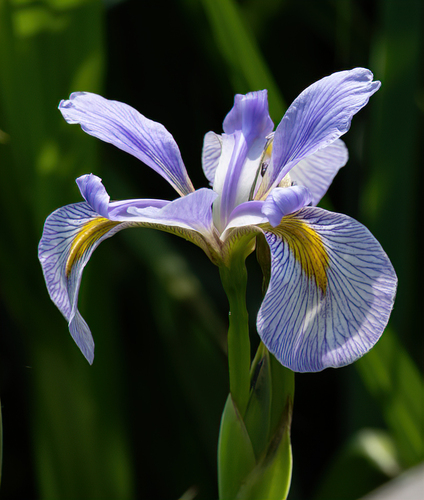
Blue Flag Iris (Iris virginica) with vibrant violet-blue blooms at water's edge North & Central FL Wildflower Wikimedia Commons

Iris virginica Β· Iridaceae

Blue Flag Iris

One of Florida's most beautiful native wildflowers, blooming in stunning violet-blue in spring. Thrives at the edges of ponds, wet ditches, and rain gardens. A magnet for long-tongued bees, hummingbirds, and swallowtail butterflies. Spreads by rhizome to form striking colonies.

β˜€οΈ
Light
Full Sun – Part Shade
πŸ’§
Water
Wet – Standing Water OK
πŸ“
Size
2–3 ft tall, spreading
🌑️
Cold
North & Central FL
Long-Tongued Bees Hummingbirds Swallowtails
Lopsided Indiangrass (Sorghastrum secundum) with golden seed plumes catching light North & Central FL Grass Wikimedia Commons

Sorghastrum secundum Β· Poaceae

Lopsided Indiangrass

A graceful native ornamental grass that puts on a spectacular show in fall β€” golden seed plumes catch the light beautifully. A key component of Florida flatwoods and native meadow plantings. Seeds feed dozens of sparrow and finch species through winter. Virtually zero maintenance once established.

β˜€οΈ
Light
Full Sun
πŸ’§
Water
Low
πŸ“
Size
3–5 ft tall
🌑️
Cold
North & Central FL
Sparrows & Finches Nesting Material
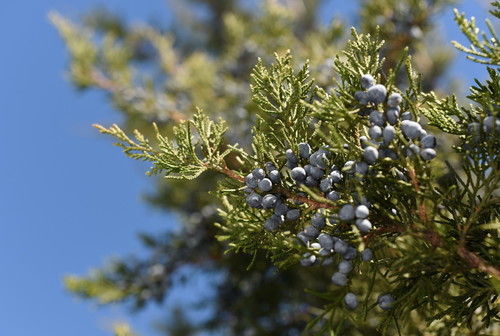
Eastern Red Cedar (Juniperus virginiana) with dense dark green foliage and blue-purple berries All Florida Tree Wikimedia Commons

Juniperus virginiana Β· Cupressaceae

Eastern Red Cedar

One of the most wildlife-productive trees you can plant for birds. The blue-purple berries (technically cones) are eaten by over 50 bird species including cedar waxwings, robins, and bluebirds. Dense evergreen foliage provides critical winter roosting and nesting cover. Salt-tolerant and adaptable.

β˜€οΈ
Light
Full Sun
πŸ’§
Water
Low
πŸ“
Size
30–65 ft tall
🌑️
Cold
Hardy throughout FL
50+ Bird Species Winter Roosting Cedar Waxwings
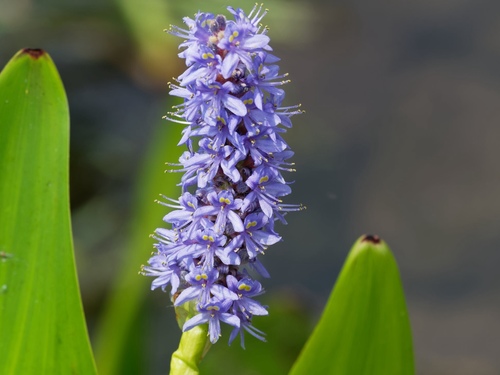
Pickerelweed (Pontederia cordata) with vivid purple flower spikes at water's edge All Florida Wildflower Wikimedia Commons

Pontederia cordata Β· Pontederiaceae

Pickerelweed

A stunning aquatic wildflower for pond margins and wet gardens. Vivid purple flower spikes bloom spring through fall, attracting an enormous variety of native bees, skippers, and swallowtail butterflies. Seeds are eaten by waterfowl. Spreads steadily in wet conditions to form productive colonies.

β˜€οΈ
Light
Full Sun – Part Shade
πŸ’§
Water
Wet to Aquatic
πŸ“
Size
2–4 ft tall, spreading
🌑️
Cold
Hardy throughout FL
Native Bees Swallowtails Waterfowl (seeds)
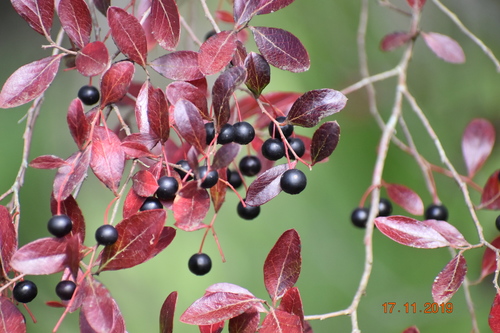
Sparkleberry (Vaccinium arboreum) with small white bell flowers and glossy foliage North & Central FL Shrub / Small Tree Wikimedia Commons

Vaccinium arboreum Β· Ericaceae

Sparkleberry

Florida's largest native blueberry β€” a handsome small tree or large shrub with beautiful white bell flowers in spring, attractive fall foliage, and small black berries that songbirds devour. Highly drought-tolerant once established. Gorgeous four-season interest and wildlife value.

β˜€οΈ
Light
Full Sun – Part Shade
πŸ’§
Water
Low
πŸ“
Size
8–25 ft tall
🌑️
Cold
North & Central FL
Songbirds (berries) Native Bees
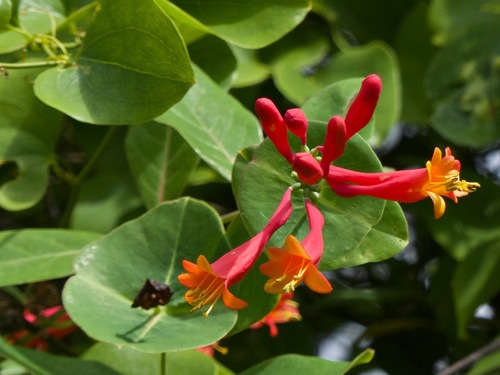
Coral Honeysuckle (Lonicera sempervirens) with bright red tubular flowers on a trellis All Florida Vine Wikimedia Commons

Lonicera sempervirens Β· Caprifoliaceae

Coral Honeysuckle

Florida's native alternative to the invasive Japanese honeysuckle. Brilliant red-orange tubular flowers bloom almost year-round in South and Central Florida, with ruby-throated hummingbirds as devoted regulars. Not invasive β€” it climbs gracefully and stays well-behaved on a fence or trellis.

🌀️
Light
Full Sun – Part Shade
πŸ’§
Water
Low–Moderate
πŸ“
Size
10–20 ft climbing
🌑️
Cold
Hardy throughout FL
Hummingbirds Sphinx Moth Host Birds (berries)
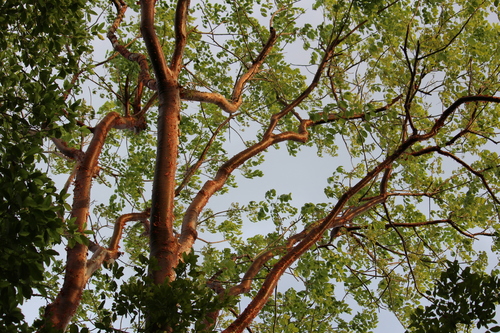
Gumbo Limbo (Bursera simaruba) showing distinctive smooth copper-red peeling bark South Florida Tree Wikimedia Commons

Bursera simaruba Β· Burseraceae

Gumbo Limbo

The "tourist tree" β€” named for its peeling, sunburned copper-red bark. A beloved South Florida native that thrives in coastal conditions, tolerates salt and drought, and provides rich wildlife value. Remarkably hurricane-resistant, often flexing through storms that fell other trees.

β˜€οΈ
Light
Full Sun
πŸ’§
Water
Low
πŸ“
Size
30–60 ft tall
🌑️
Cold
South Florida Only
Birds (berries) Nesting Habitat
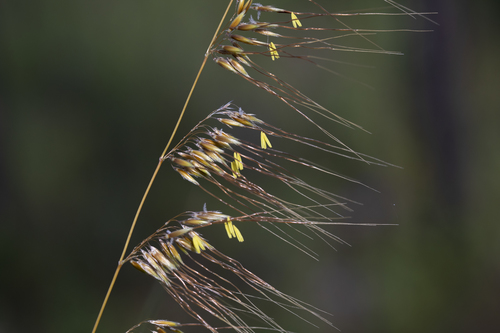
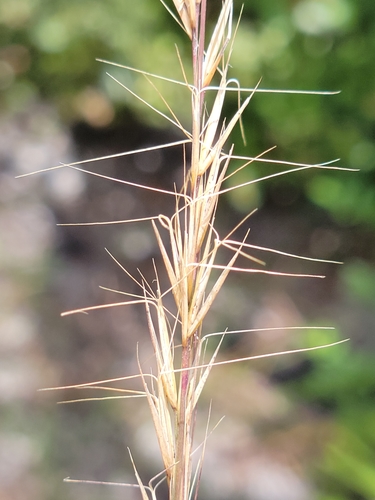
Wiregrass (Aristida beyrichiana) β€” Florida's iconic flatwoods groundcover grass North & Central FL Grass Wikimedia Commons

Aristida beyrichiana Β· Poaceae

Wiregrass

The defining groundcover of Florida's longleaf pine flatwoods β€” and one of the most ecologically important grasses in the Southeast. Fire-adapted and essential for maintaining open flatwoods habitat. Provides critical cover for ground-nesting birds and gopher tortoises. Extremely drought tolerant in sandy soils.

β˜€οΈ
Light
Full Sun
πŸ’§
Water
Very Low
πŸ“
Size
1–2 ft tall, spreading
🌑️
Cold
North & Central FL
Ground-Nesting Birds Gopher Tortoise Habitat
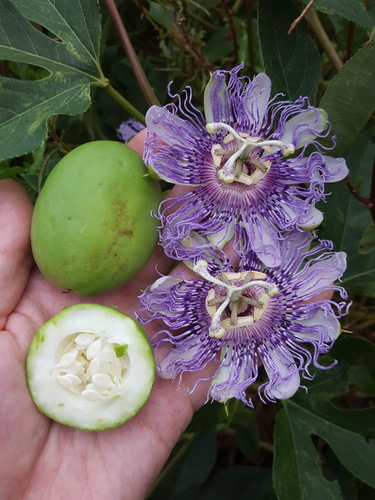
Native Passionflower (Passiflora incarnata) with intricate lavender and white blooms All Florida Vine Wikimedia Commons

Passiflora incarnata Β· Passifloraceae

Native Passionflower

One of the most extraordinary flowers in North America β€” intricate, otherworldly lavender blooms that stop everyone in their tracks. The exclusive host plant for Gulf Fritillary and Zebra Longwing butterflies (Florida's state butterfly). Spreads readily by rhizome. Fruit eaten by wildlife and humans alike.

β˜€οΈ
Light
Full Sun – Part Shade
πŸ’§
Water
Low–Moderate
πŸ“
Size
10–30 ft climbing
🌑️
Cold
Hardy throughout FL
Gulf Fritillary Host Zebra Longwing Host Wildlife (fruit)
🌱

No plants match that search

Try a different name, trait, or filter β€” or clear the search to see all plants.

More Resources

Ready to go deeper on Florida natives?

Visit our Learn About Natives page for ecosystem guides, regional recommendations, and everything you need to get started.

Learn About Natives Free Resources