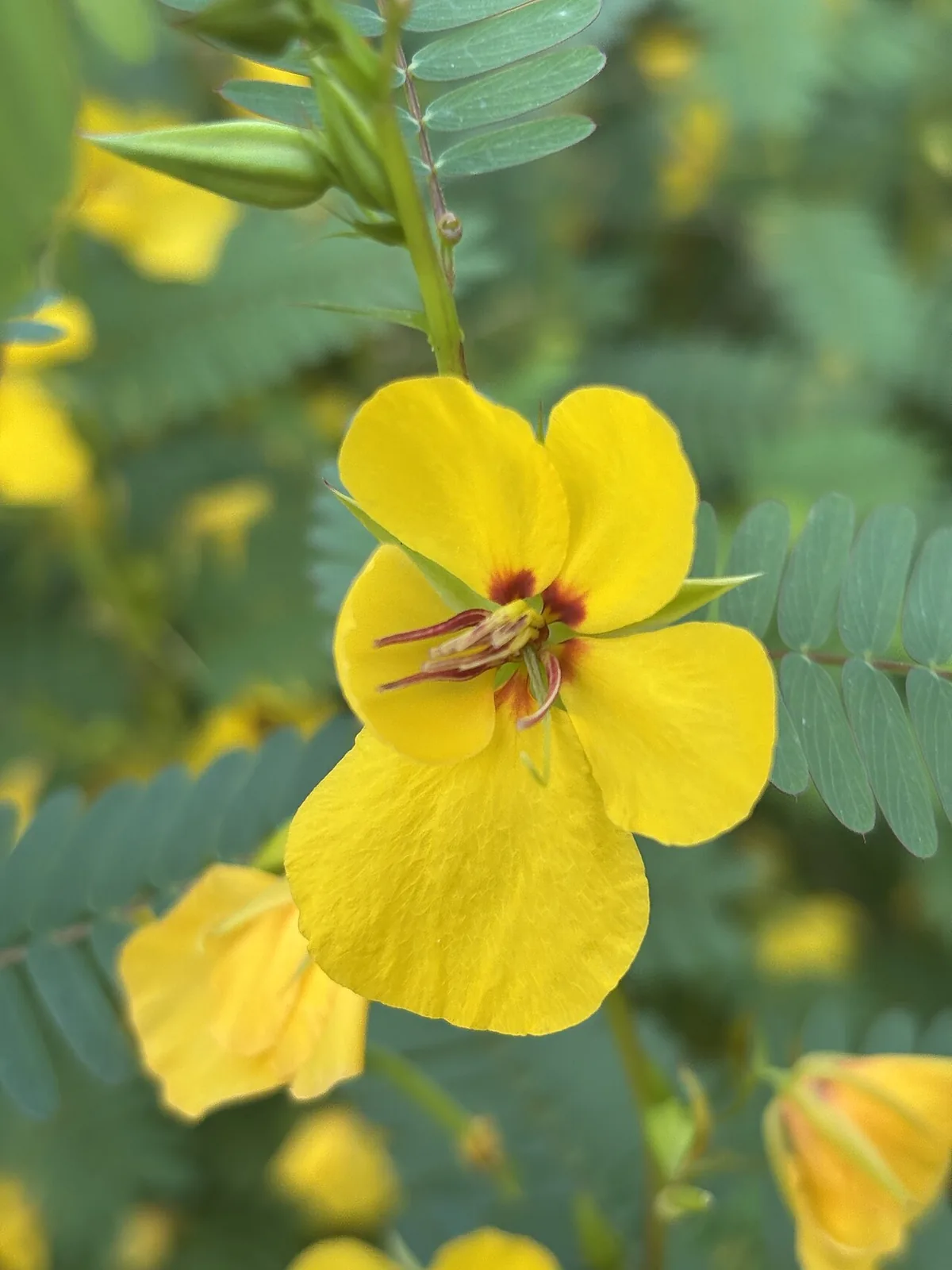
Partridge Pea
Chamaecrista fasciculata · Wildflower
| Mature Size | To 3 ft tall × 3 ft wide; an annual that reseeds so densely it works like a perennial groundcover |
|---|---|
| Sunlight | Full sun |
| Water | Low to moderate; drought-tolerant once established — not for wet soil |
| Soil | Sand, including poor soil — it's a legume and fixes its own nitrogen. Native to scrub, sandhills, dry flatwoods, and dunes: a natural fit for Hernando County |
| Bloom & Fruit | Sprouts in early spring, blooms yellow from late spring, finishes reproduction by early fall, then reseeds. |
Wildlife Value
A butterfly nursery: verified host for the cloudless sulphur, gray hairstreak, orange sulphur, sleepy orange, little yellow, and ceraunus blue. Long-tongued bees (bumblebees, long-horned and leaf-cutting bees) pollinate it, and the seeds are eaten by birds and other wildlife — reportedly especially important for bobwhite quail.
In Zone 9B (Spring Hill / Hernando)
FNPS lists zones 8A–10B, so 9B is in range. A warm-season annual: good late spring through summer, gone by fall, back from seed next spring — don't expect winter interest. Good for naturalized areas and erosion control.
Grow Notes
- Sow seed where it's to grow, in a sunny, poor, sandy spot — it needs no fertilizer and resents rich, wet soil.
- Leave some seed pods standing in fall if you want it back; thin spring volunteers if they're too dense.
Sources: FNPS Plant Database; UF/IFAS Gardening Solutions, “Cloudless Sulphur Butterfly.”
Pairs Well With in Zone 9B
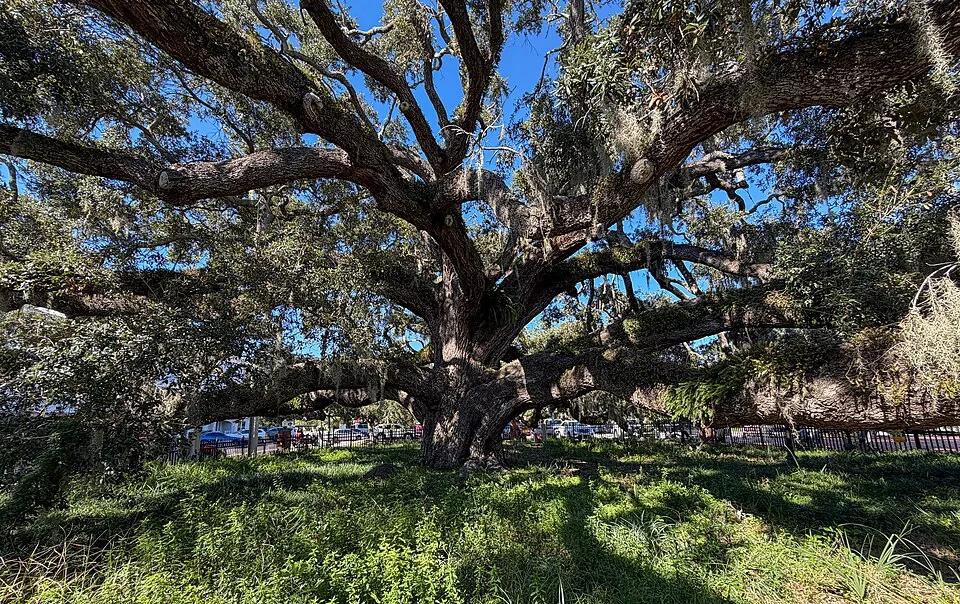 Tree
FL Native
Live Oak
60–80 ft tall × 60–120 ft spread · Full sun to part shade · Moderate
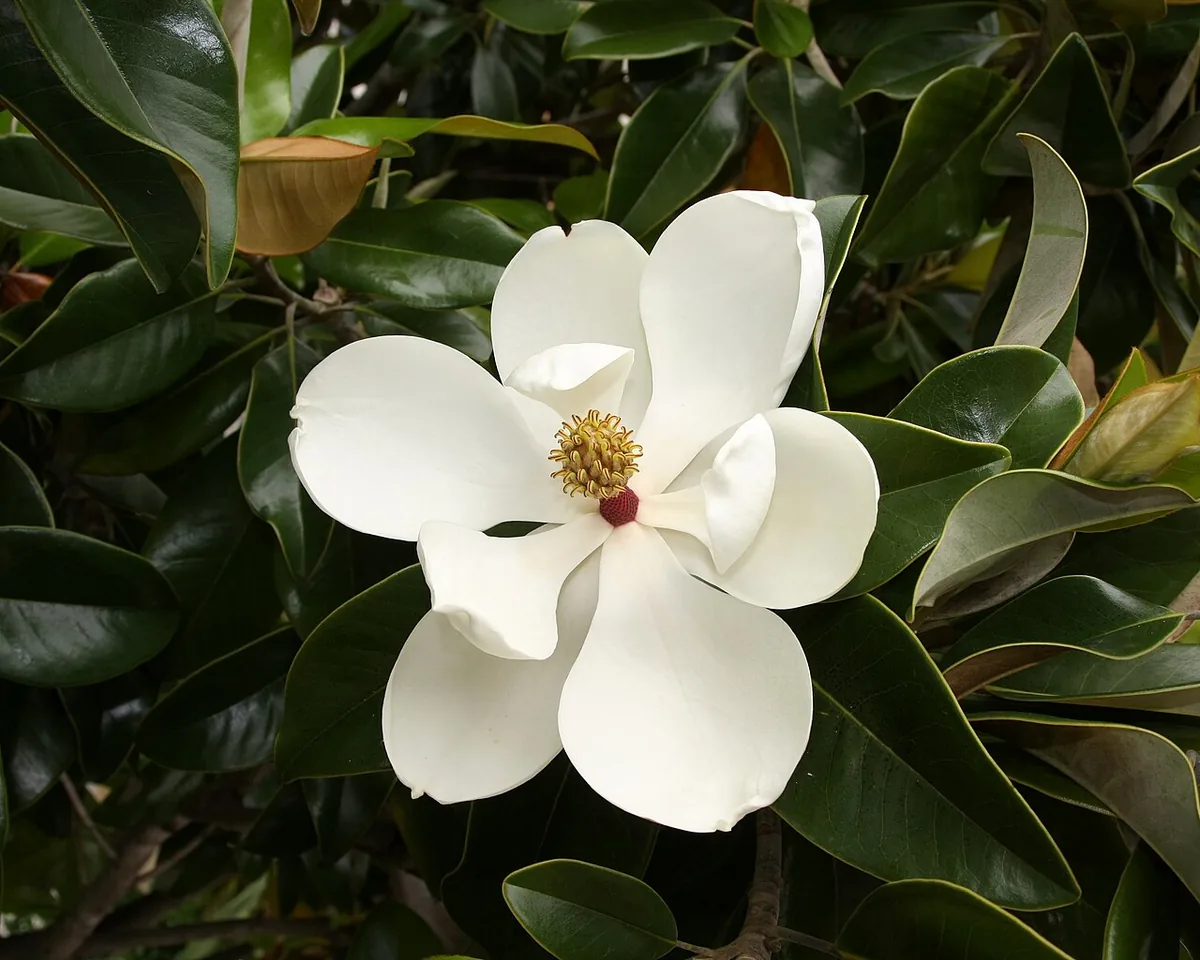 Tree
FL Native
Southern Magnolia
60–80 ft tall × 30–40 ft spread · Full sun to part shade · Moderate
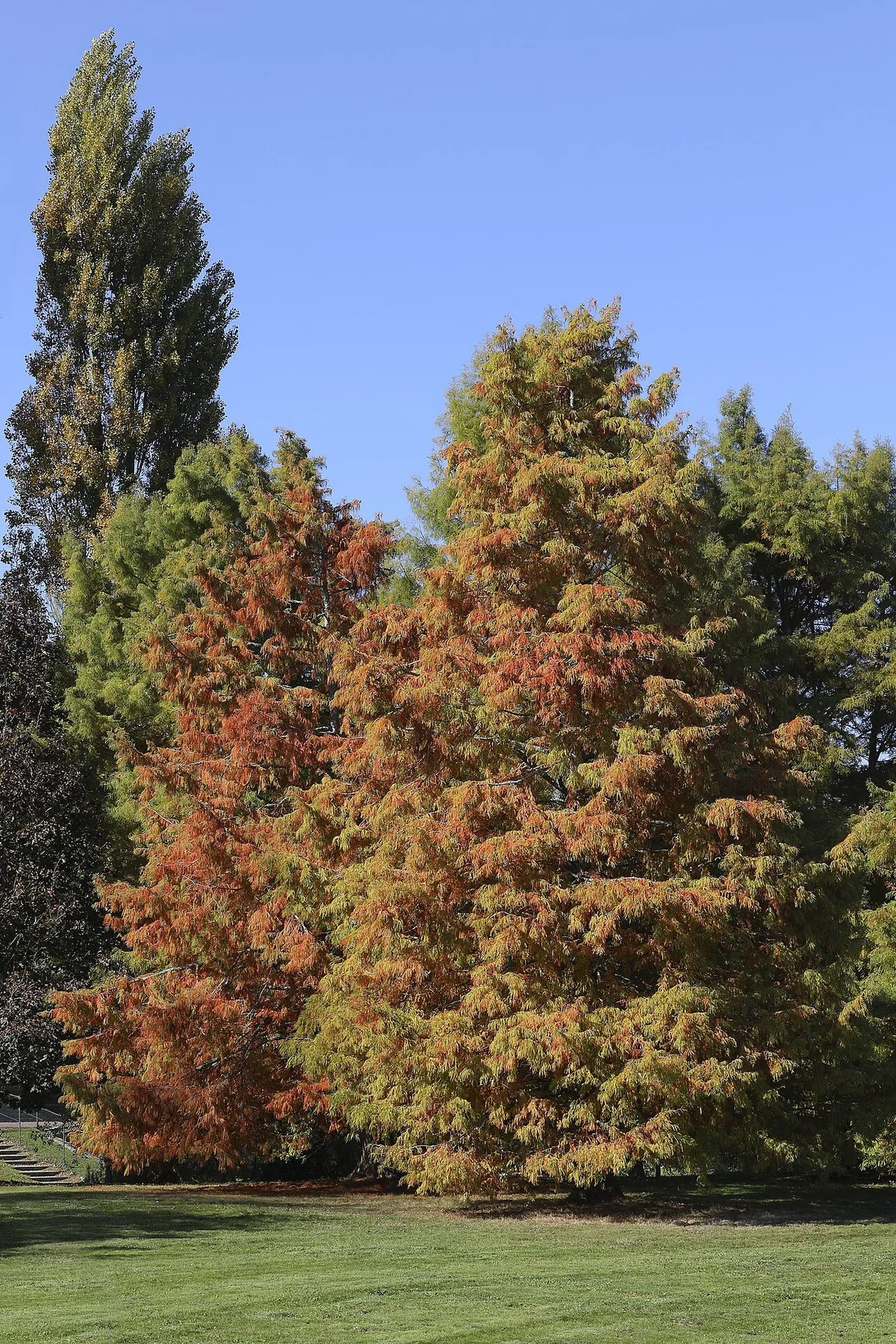 Tree
FL Native
Bald Cypress
60–80 ft tall × 25–35 ft spread · Full sun to part shade · Loves wet