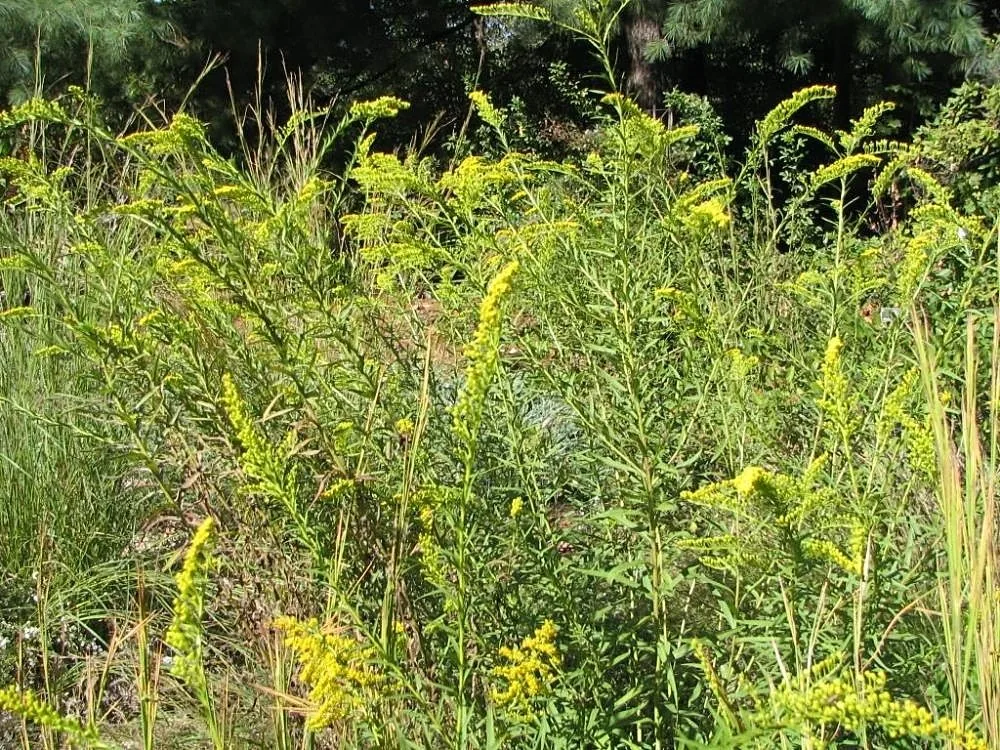
Seaside Goldenrod
Solidago sempervirens · Wildflower
| Mature Size | Roughly 3–6 ft tall — shorter (2½–3½ ft) in lean, dry sand, taller and floppier in rich, moist ground |
|---|---|
| Sunlight | Full sun |
| Water | Low; high drought and salt tolerance; dry to damp soils |
| Soil | Coarse, infertile soils, pH 5.5–7.5 (USDA). A coastal dune and salt-marsh species — Hernando sand suits it, rich watered beds don't |
| Bloom & Fruit | Bright yellow flowers in dense, clustered spikes, late summer into fall — October into November in Florida, sometimes with a secondary spring bloom. Its individual flowers are larger than most goldenrods'. |
Wildlife Value
Fall fuel: UF/IFAS notes it draws birds, native bees, honey bees, butterflies (especially monarchs), and beneficial insects; USDA credits it as an important energy source for fall-migrating monarchs, and Xerces lists goldenrods as vital late nectar for pre-hibernation bumblebee queens.
In Zone 9B (Spring Hill / Hernando)
UF/IFAS Volusia County lists zones 8a–11 — 9B is in range. A late-season star with thick, waxy leaves all summer. Inland it grows happily away from the coast (UF/IFAS notes it expanding inland along roadsides), but it spreads by stolons and can pass 6 ft, so give it the back of a bed, not an edging job.
Grow Notes
- Give it space and full sun, and don't over-fertilize — lean sand keeps it shorter and sturdier.
- Cut back spent stalks after bloom to limit spread, or leave the seed heads for birds and fall pollinators.
Sources: UF/IFAS EDIS SG185; USDA NRCS Plant Guide (SOSE); UF/IFAS EDIS FA272.
Pairs Well With in Zone 9B
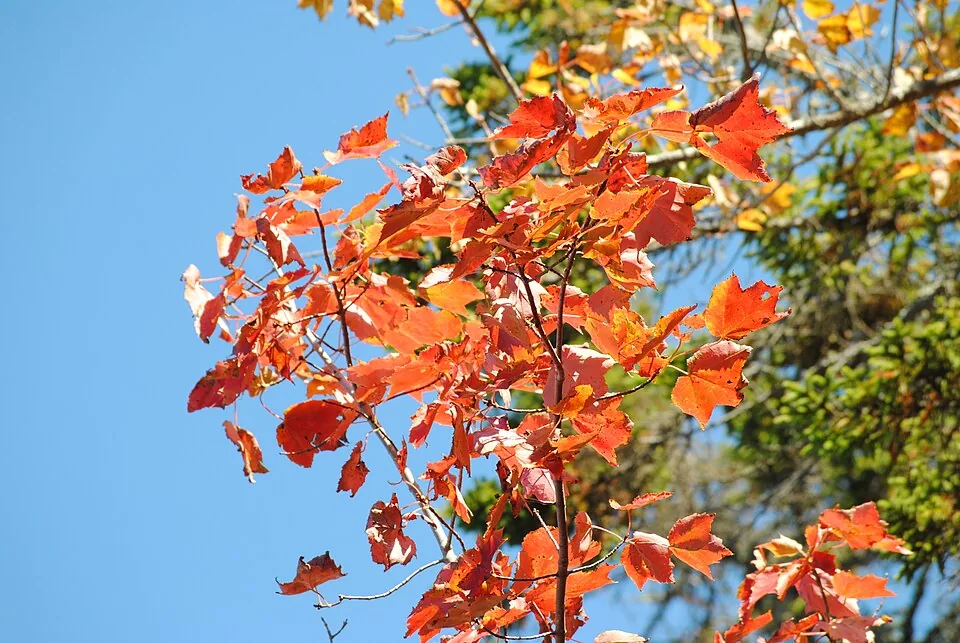 Tree
FL Native
Red Maple
60–75 ft tall × 25–35 ft spread (often shorter in South Florida unless on a wet site) · Full sun to part shade · Moderate to high
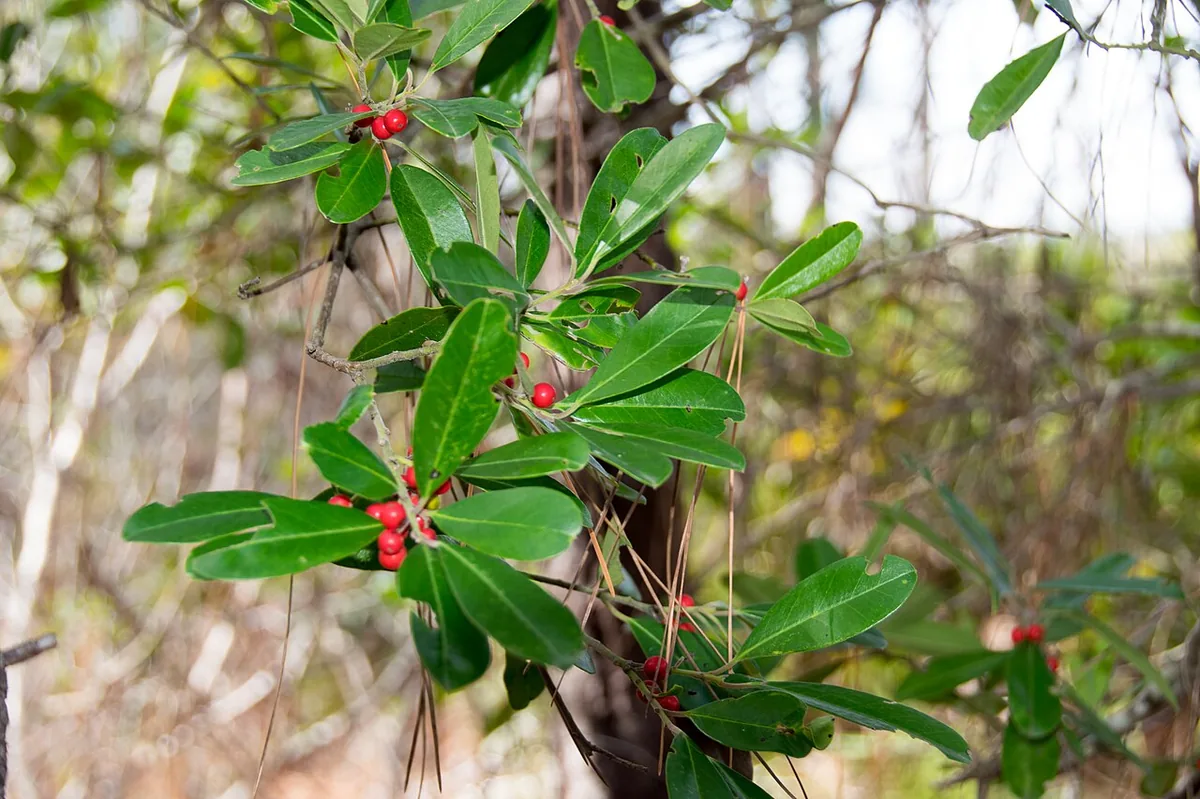 Tree
FL Native
Dahoon Holly
20–30 ft tall × 8–12 ft spread (can reach 40 ft) · Full sun to part shade · Moderate
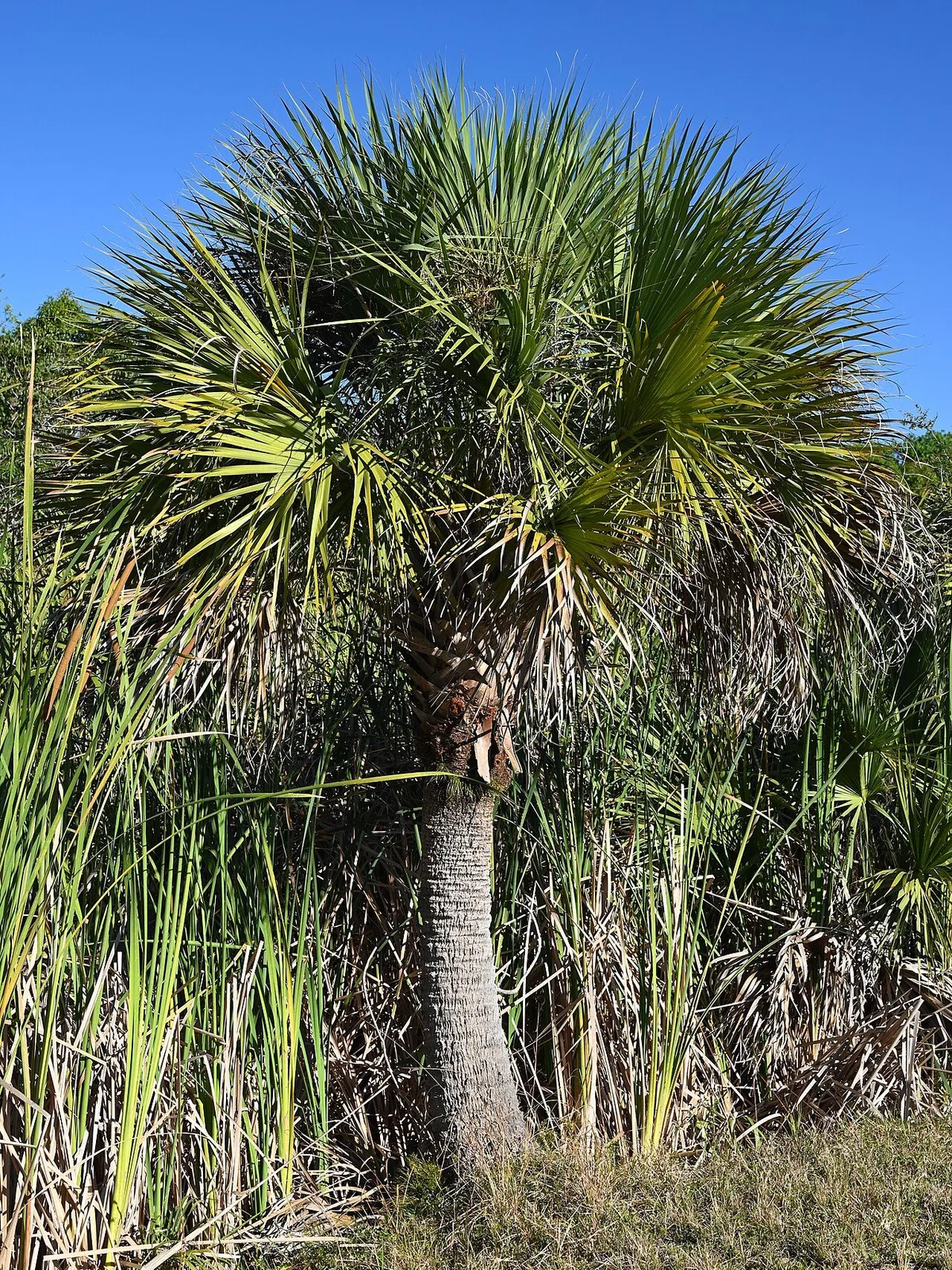 Tree
FL Native
Cabbage Palm (Sabal Palm)
Trunk to about 40 ft (30–80 ft overall range) · Full sun to part shade · Moderate while establishing