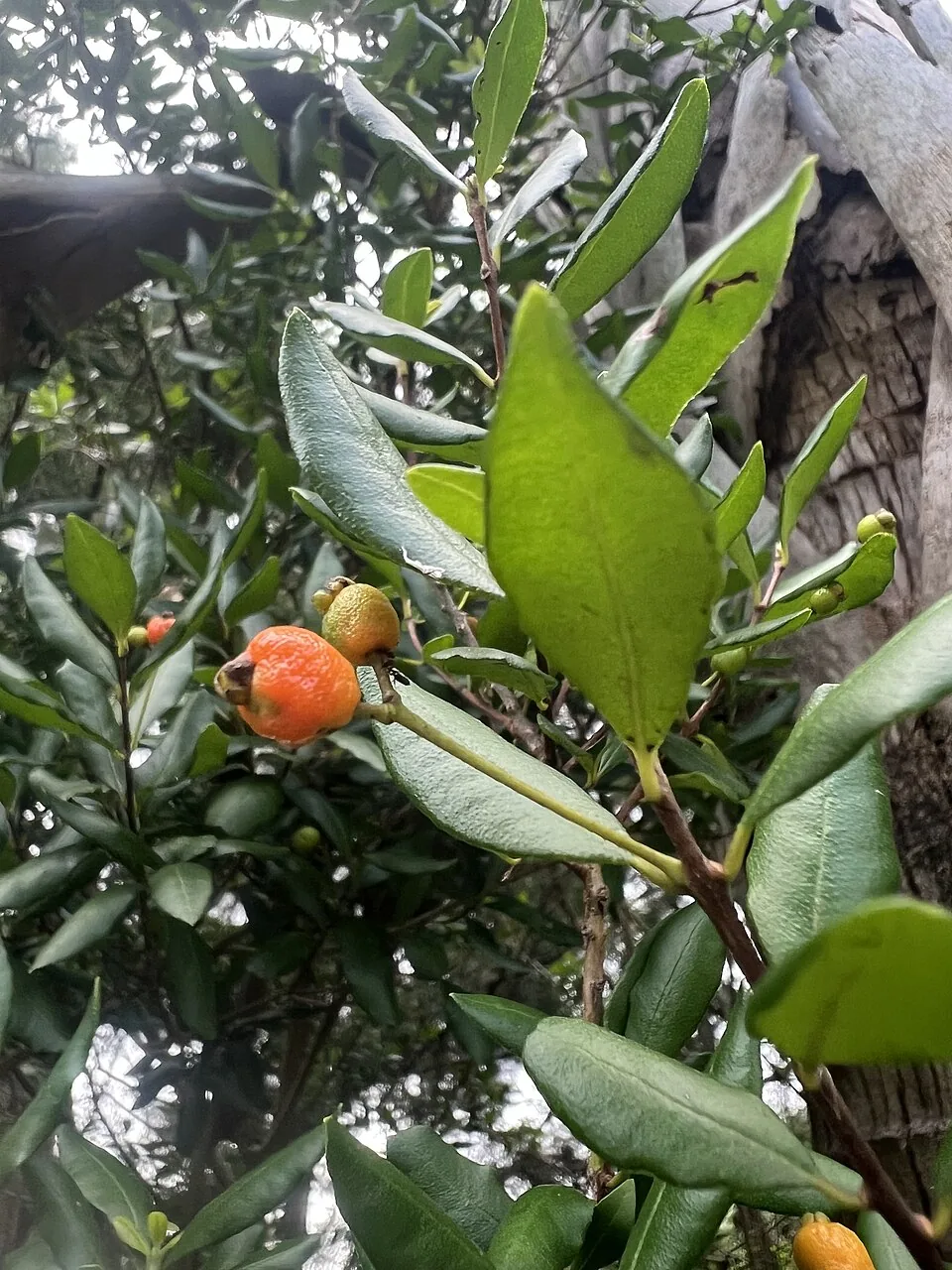
Simpson's Stopper
Myrcianthes fragrans · Shrub
Zone 9B Honesty Check
At its cool edge in 9B — plant in a sheltered spot.
| Mature Size | To ~20 ft tall (dwarf 'Compacta' stays ~5 ft) |
|---|---|
| Sunlight | Full sun (densest) to part shade |
| Water | Low once established; drought-tolerant |
| Soil | Well-drained soils; tolerates sand, limerock, and alkaline conditions; salt tolerant |
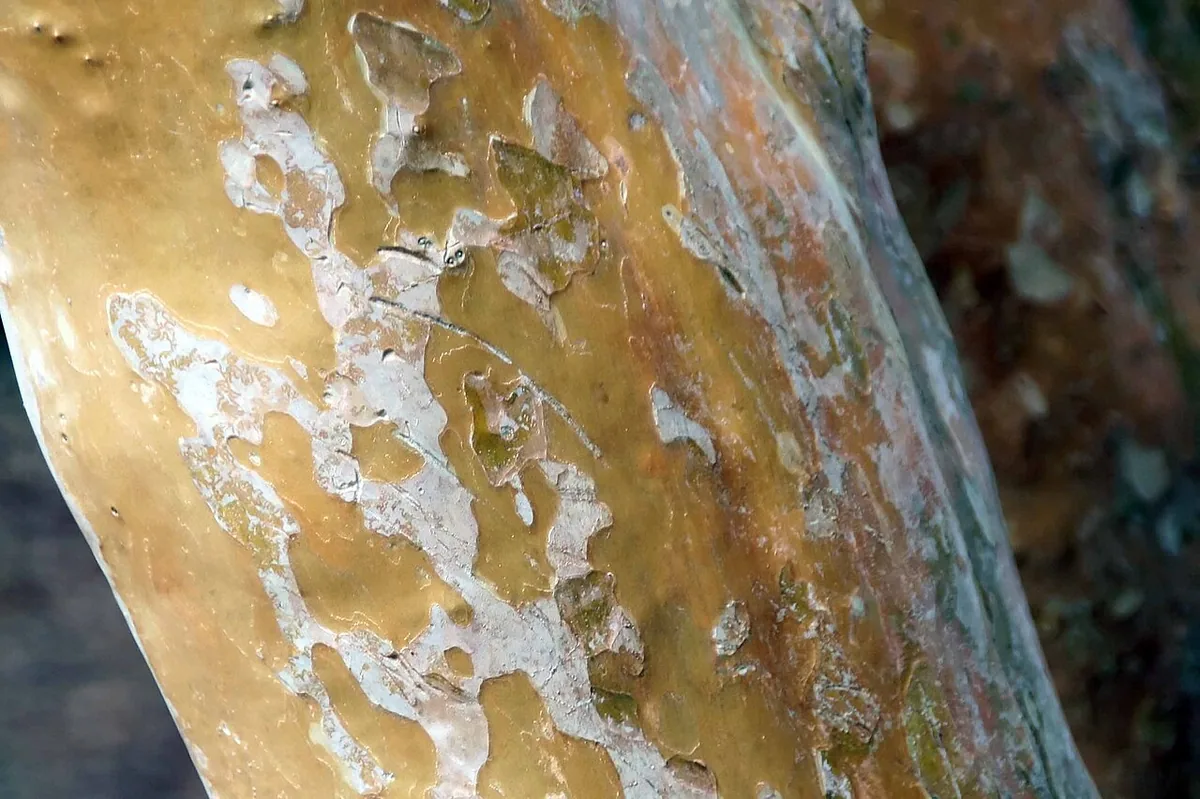
| Bloom & Fruit | Fragrant, showy white flowers, generally April–May, followed by orange-to-red berries in late summer–early fall. Peeling cinnamon-brown bark and wine-tinted new growth add interest year-round. |
Wildlife Value
Flowers draw pollinators; cardinals, mockingbirds, and blue jays eat the berries. Listed as threatened in Florida — buy nursery-grown plants only, never wild-collected.
In Zone 9B (Spring Hill / Hernando)
UF/IFAS recommends zones 8b–11 and notes hardiness to about 25°F — a typical 9B winter is right at its limit, so expect possible tip damage in the coldest pockets and plant it somewhere sheltered. Grows about 1 ft a year and thrives in our summers.
Grow Notes
- Choose 'Compacta' (~5 ft) for foundation beds — the standard form will outgrow them.
- Plant with the root flare at or slightly above soil level, and water young plants through dry spells for the first few years.
Sources: UF/IFAS Gardening Solutions, “Simpson's Stopper”; UF/IFAS FPS-418.
Pairs Well With in Zone 9B
 Tree
FL Native
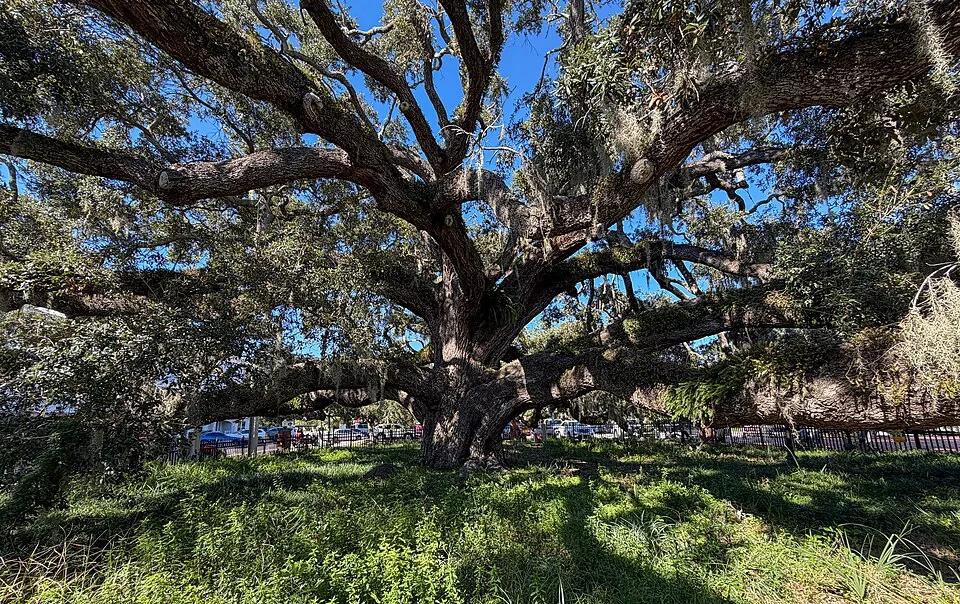
Live Oak
60–80 ft tall × 60–120 ft spread · Full sun to part shade · Moderate
 Tree
FL Native
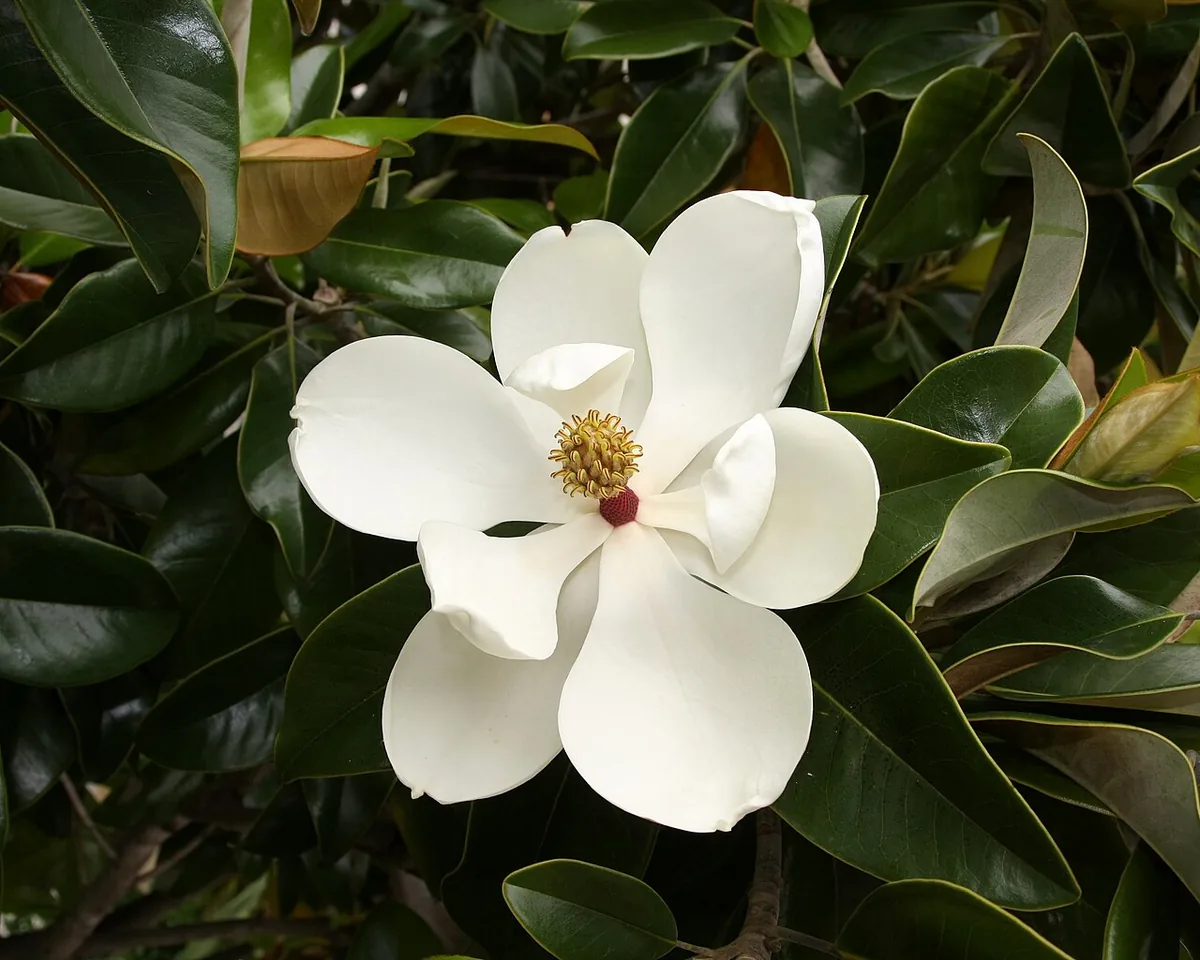
Southern Magnolia
60–80 ft tall × 30–40 ft spread · Full sun to part shade · Moderate
 Tree
FL Native
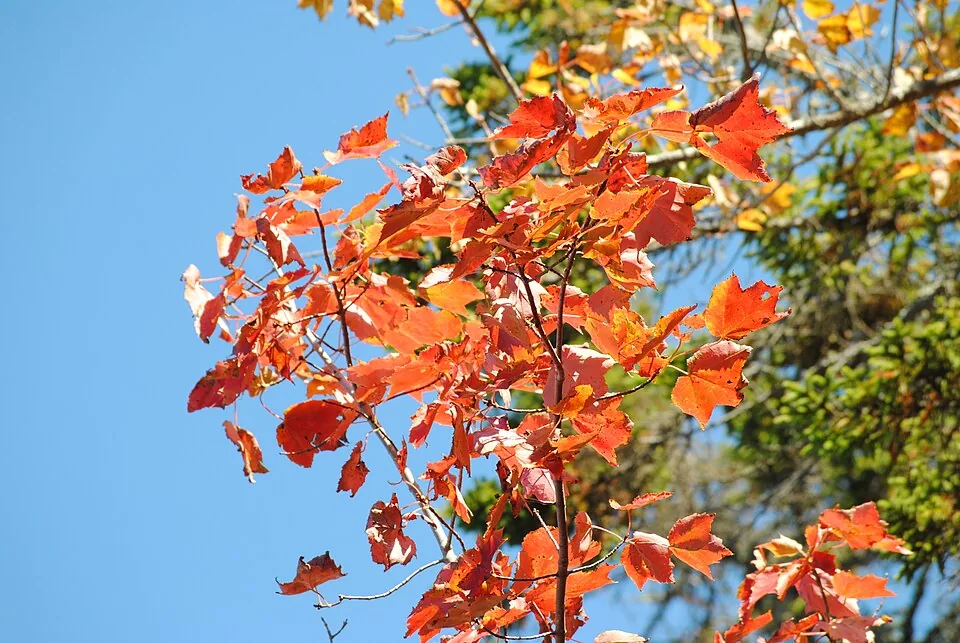
Red Maple
60–75 ft tall × 25–35 ft spread (often shorter in South Florida unless on a wet site) · Full sun to part shade · Moderate to high